Commentary by Jared: The federal government is slashing funding Vermont relies on, while giving $57,000 tax cuts to the top 1%
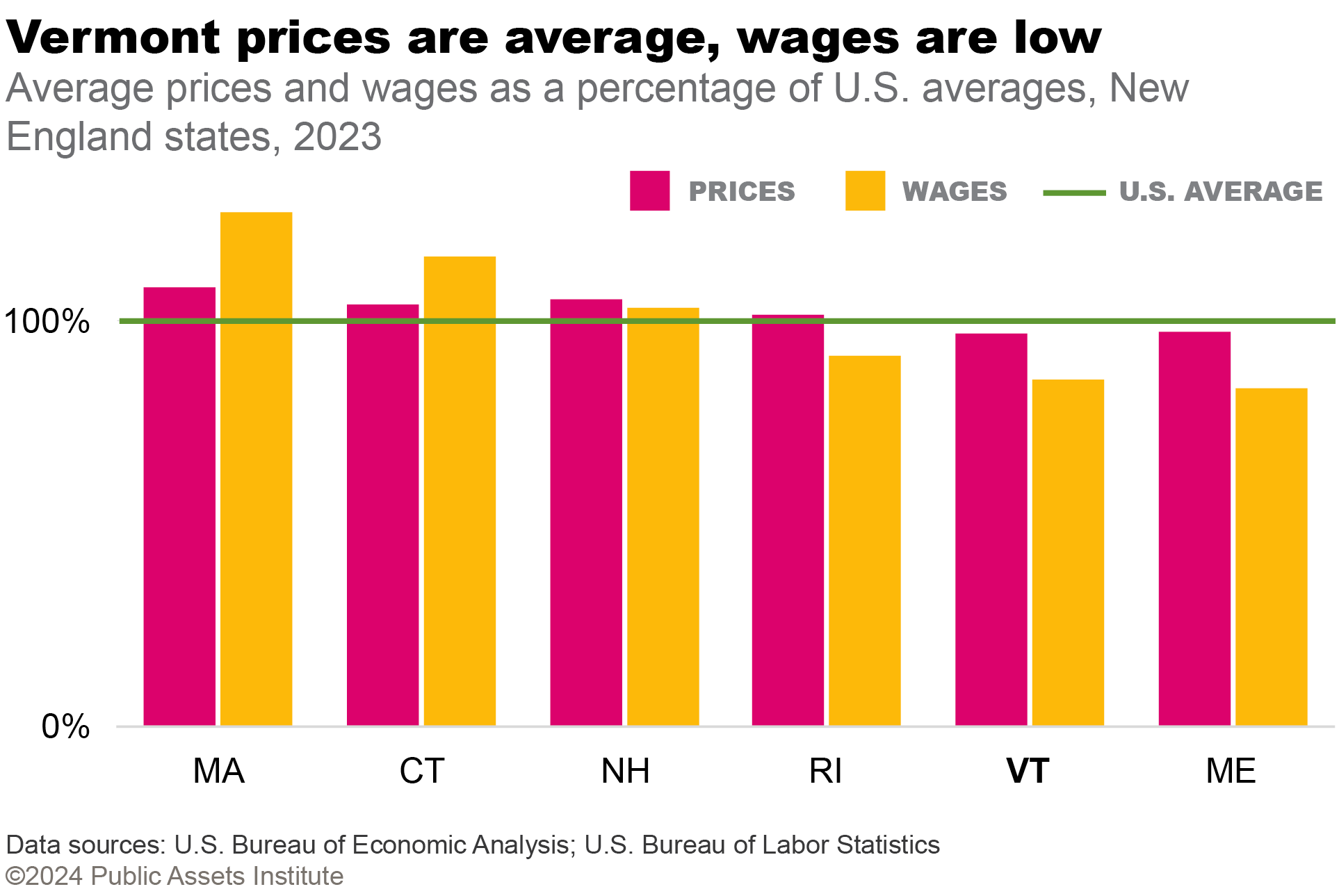
Commentary published by The Times Argus March 21, 2026 - Vermonters agree – we need to make our state more affordable to live in. While prices for goods and services in Vermont are around the national average, Vermont wages are significantly below national and regional averages. This wage vs. price gap in Vermont puts a particular burden on working class Vermonters trying to make ends meet.
At the same time, and reflecting national trends, the richest 10% of Vermonters now hold nearly 50% of all income in our state – near the highest that share has been in over 100 years – with income gains over the last decade being over two and a half times higher for those in the top 10% as for middle income earners.
In the last year, the situation has gotten significantly worse, with much of the funding Vermonters have historically relied on from the federal government being cut by the Trump administration and the Republican Congress. Health insurance subsidies. Medicaid. Food assistance. Disaster recovery. Transportation funding. The list is long (and much more information is available via the federal policy changes tracker maintained by the Public Assets Institute).
Let’s take just one example: healthcare. With the expiration of federal credits at the end of last year, many middle-income Vermonters relying on the state exchange for health insurance faced a terrible choice: pay as much as $10,000 more a year for individual coverage (or $32,000 more for a family of four), accept far worse coverage, or go without insurance. In the face of these increased costs imposed by the federal government, over 2,500 Vermonters felt they had no other choice but to go uninsured. Additionally, an estimated 16,000 Vermonters are expected to lose Medicaid coverage due to federal policy changes, with an estimated cut of nearly $2.7 billion in federal Medicaid funding to Vermont over ten years.
It's a similar story with food assistance: as many as 40,000 households in Vermont could see their access to 3Squares Vermont affected, with federal funding for food assistance via SNAP benefits expected to decline by between $7 million to $22 million a year.
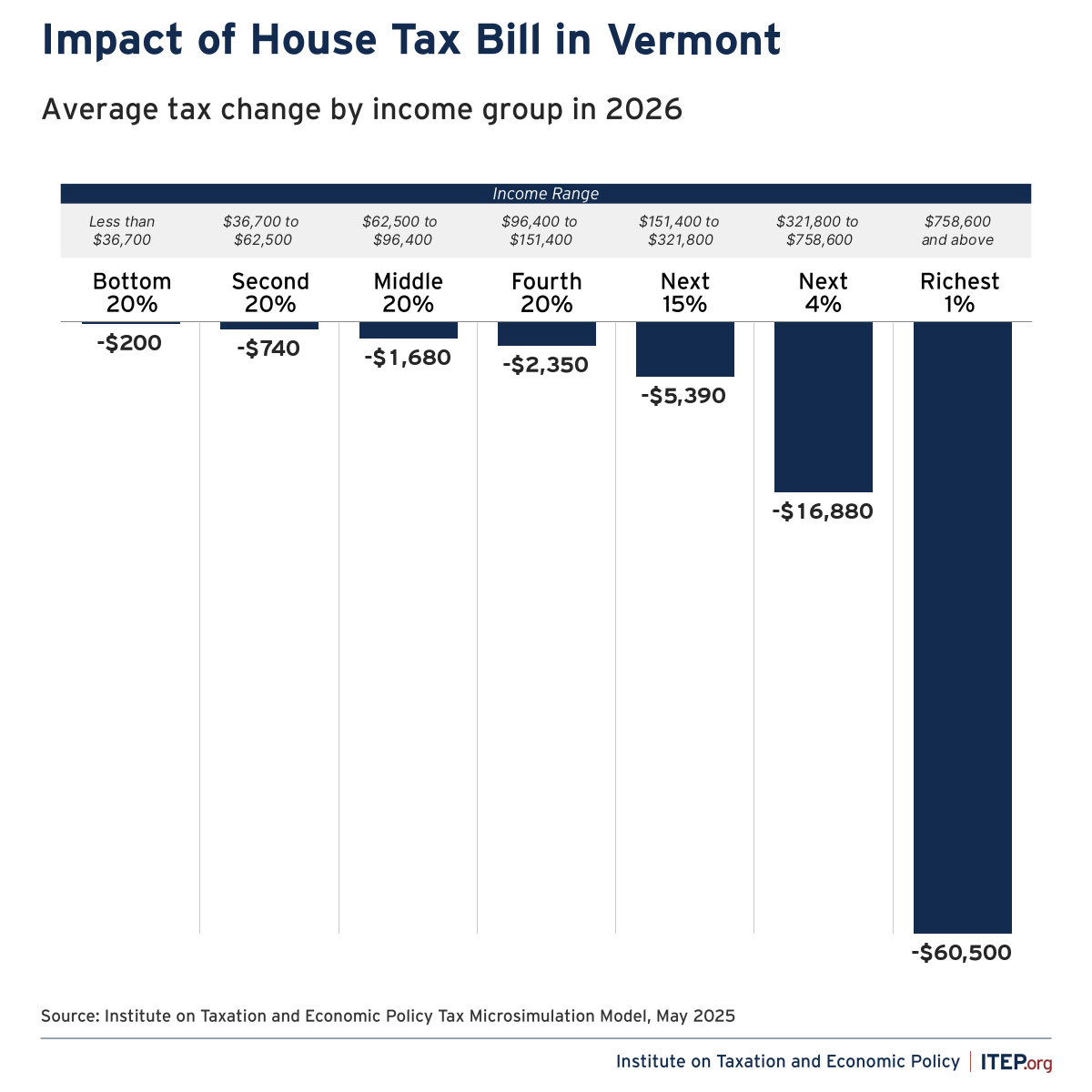
Meanwhile, with the passage of H.R. 1 – the Trump megabill – the top 1% of Vermont income earners are now set to receive an average annual tax cut of $57,000 a year, beginning this year. That’s the new equation: cut vital services for those just trying to get by to pay for tax cuts for the wealthiest.
But Vermont doesn’t need to sit by and just let this happen. We have the ability to recoup lost federal tax revenue from the highest income earners here at the state level and then invest it to help working Vermonters – including helping to maintain subsidies that allow people to retain health coverage and have food assistance.
While Vermont is known for its relatively progressive tax code, it’s not as progressive as is often believed. In fact, the top 1% of income earners in Vermont – those making nearly $600,000 a year and more – pay less in state and local taxes as a share of total income than Vermonters making $83,000 a year.
One of the most thoughtful and promising efforts to address this disparity is being led by Representatives Teddy Waszazak, Tiff Bluemle, and Dave Yacovone via H. 621. The bill would create new tax brackets that would apply tiered tax increases on incomes over approximately $500,000 and $1 million. It is anticipated that this would result in $100 - 200 million in new revenue for Vermont per year. This is money that could be used to help limit cuts to health assistance, stabilize vitally needed food assistance, and/or invest in more affordable housing.
We should always work to carefully understand cost drivers, achieve efficiencies, and reduce costs as possible across government in order to lower taxes and fees – especially for lower- and middle-income Vermonters, for whom taxes and fees represent the greatest burden. But we can't just cut our way to a better future. Many public goods that make life more dignified and affordable for thousands of Vermonters – from health insurance to food assistance – require greater public investment, not less. Failing to restore taxes on the very wealthiest during these times would leave us trying to defend vulnerable Vermonters while the ground gives way beneath us.
To be able to make smart investments that advance dignity and affordability for all Vermonters, we need to re-center the principle of progressive taxation – of levying taxes based on ability to pay. As the federal government takes money away from Vermont to pay for tax cuts for the very wealthiest, state government can and should step up. Now is the time for state leaders to ask the highest income Vermonters to go back to paying more of a fair share in taxes. Otherwise, we will be unable to maintain some of the most crucial lifelines for working Vermonters in this extremely difficult and imbalanced economy.